
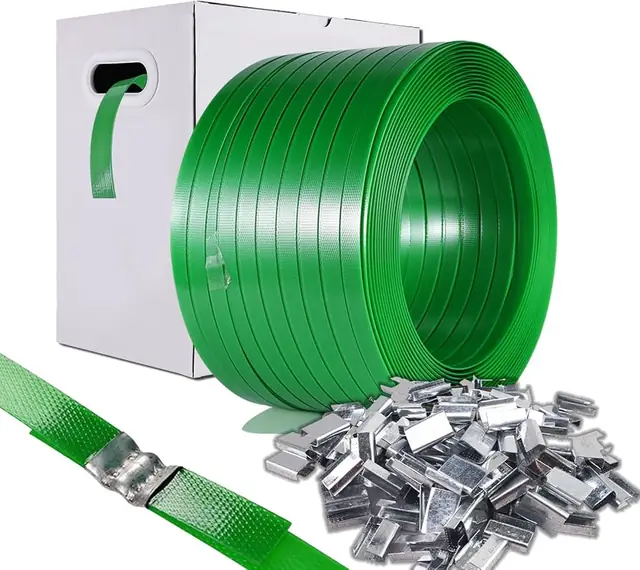
The question we hear most from traders and factories: PP or PET? Both are plastic and look alike, but they differ a lot in strength and use. The wrong choice means either paying for more strap than you need, or a load that comes loose on the road.
PP strap: the economical choice for cartons
PP (polypropylene) is light, cheap and heat-seals easily, which is why semi-automatic carton machines run on it. Its weakness is stretch: under a heavy or shifting load it goes slack.
Good for: cartons, courier parcels, print, produce boxes and any light-to-medium load.
PET strap: the practical replacement for steel
PET (polyester) is much stronger with very little stretch, and it has "memory": if the load settles it pulls back. That's why it now replaces steel strap on bricks, ceramics, timber and bales.
Good for: heavy pallets, building materials, timber, cotton bales and aluminium profiles.
Quick comparison
| Compared | PP strap | PET strap |
|---|---|---|
| Strength | Medium | High |
| Stretch | High | Low, holds tension |
| Price | Lower | Higher, but cheaper than steel |
| Joint | Heat seal, seal, battery tool | Friction weld, seal |
| Tools | Carton machine, hand, battery | Battery, pneumatic, hand |
So how do I decide?
Ask two questions: how heavy is the package? and is it travelling, or just moving around the warehouse? A light carton on a short trip is fine with PP. A pallet of bricks going to another governorate on a truck needs PET.
How many metres on a roll?
The formula is the same for both; only density changes: length (m) = roll weight in grams ÷ (width × thickness × density). PP is about 0.91 and PET about 1.38.
So a 20 kg PET roll of 16 × 0.8 mm holds roughly 20,000 ÷ (16 × 0.8 × 1.38) ≈ 1,130 metres.
Still unsure? Send us a photo of the goods and the rough weight on WhatsApp and we'll tell you the right type and size.
