What it's used for
- Bricks and blocks
- Ceramic tiles and marble
- Timber and boards
- Cotton and textile bales
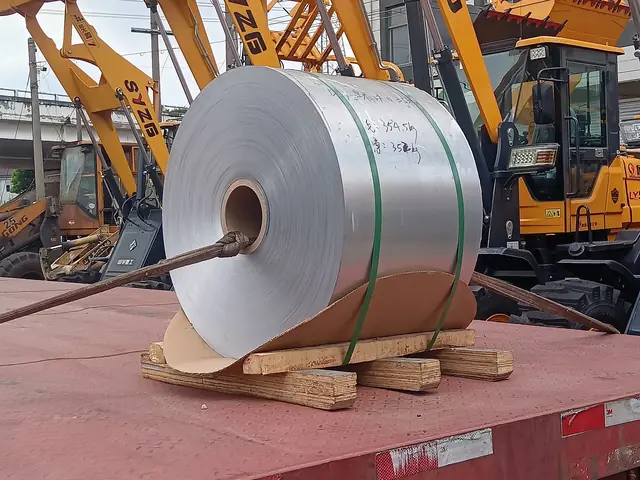
- Aluminium profiles
- Heavy pallets
- Paper and board rolls
Why PET instead of steel?
- It doesn't rust, so it won't stain or mark the goods.
- It is much lighter, and rolls are easier to carry and store.
- No sharp edges, which is safer for workers and products.
- It recovers when the load shifts in transit, instead of going slack.
- Lower cost per strap in most cases, especially with a battery tool.
Common sizes
| Width | Typical thickness | Good for |
|---|---|---|
| 12 – 13 mm | 0.5 – 0.8 mm | Heavy cartons and medium loads |
| 16 mm | 0.6 – 1.0 mm | Bricks, ceramics and timber — most requested |
| 19 mm | 0.8 – 1.2 mm | Heavy pallets and building materials |
| 25 – 32 mm | 1.0 – 1.27 mm | Very heavy loads instead of steel |
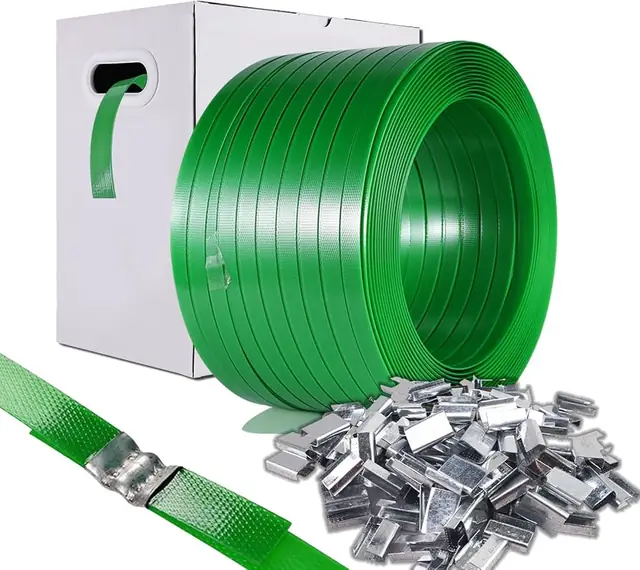
Embossed strap grips better in seals and friction welds; smooth strap is used in some automatic machines.
How it is closed
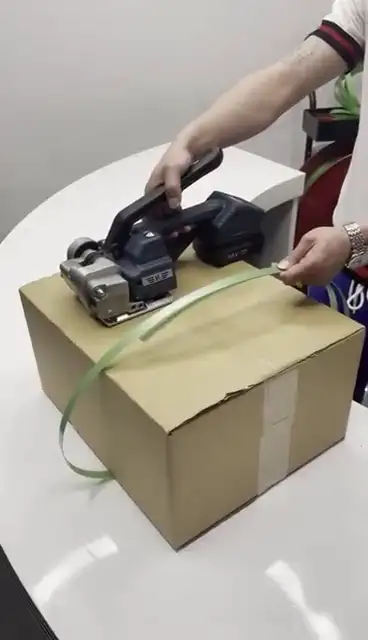
- Friction weld with a battery or pneumatic tool, no seal needed.
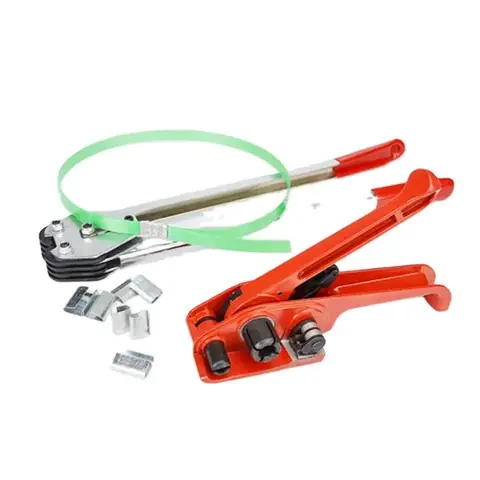
- Metal seal and sealer with a hand tensioner.
Store PET rolls away from direct sun and damp, and lay each roll on its flat side so the coil doesn't loosen.