What it's used for
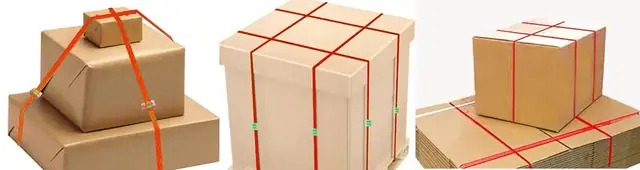
Any light-to-medium package that needs to stay closed while it is lifted and shipped:
- Factory and warehouse cartons
- Courier and e-commerce parcels
- Books, newspapers and print
- Fruit and vegetable boxes
- Bundles of flat board and paper
- Food and pharmaceutical cartons
Common sizes
Strap size is written as width × thickness. The bigger both are, the stronger the strap.
| Width | Typical thickness | Good for |
|---|---|---|
| 9 mm | 0.5 – 0.6 mm | Small cartons and semi-automatic machines |
| 12 mm | 0.6 – 0.8 mm | Medium cartons — our most requested size |
| 15 – 16 mm | 0.8 – 1.0 mm | Heavy cartons and light pallets |
| 19 mm | 0.9 – 1.0 mm | Heavier parcels and hand strapping |
Available sizes change from shipment to shipment, so ask us what is in stock today.
Machine grade or hand grade?
Machine-grade rolls are wound evenly and held to tight tolerances so they feed through a strapping machine without jamming. Hand-grade rolls are tensioned with a hand tool and closed with a metal seal, so small winding differences don't matter. Tell us your machine model and we will match the roll to it.
How it is closed
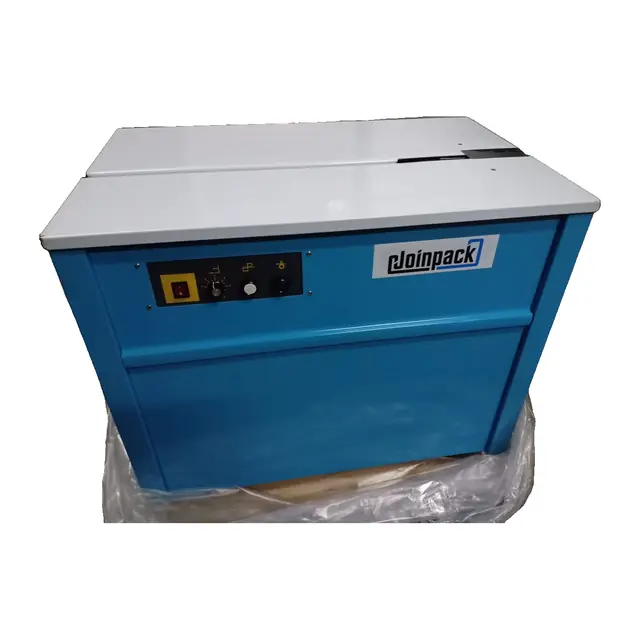
- Heat seal inside a strapping machine, no seal needed.
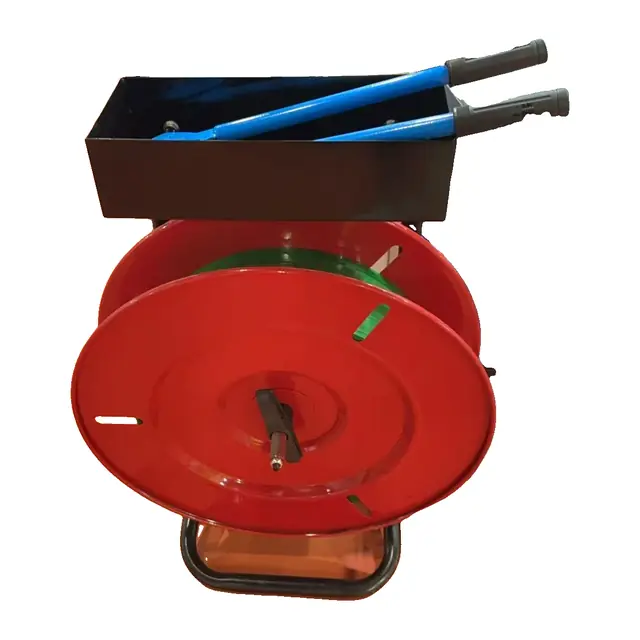
- Metal seal and sealer for hand strapping.
- Friction weld with a battery strapping tool.
- Plastic buckle to close by hand with no tool at all.
How many metres are on a roll?
A close estimate: length (m) = roll weight in grams ÷ (width × thickness × 0.91). 0.91 is the density of polypropylene.
Example: a 10 kg roll of 12 × 0.6 mm strap: 10,000 ÷ (12 × 0.6 × 0.91) ≈ 1,500 metres.
Don't over-tension PP strap. It stretches, and the edge can cut into soft cartons. Pull it just tight enough to hold the box.